Light on Some Historical Sites from the Culture of the Algerian Sahara
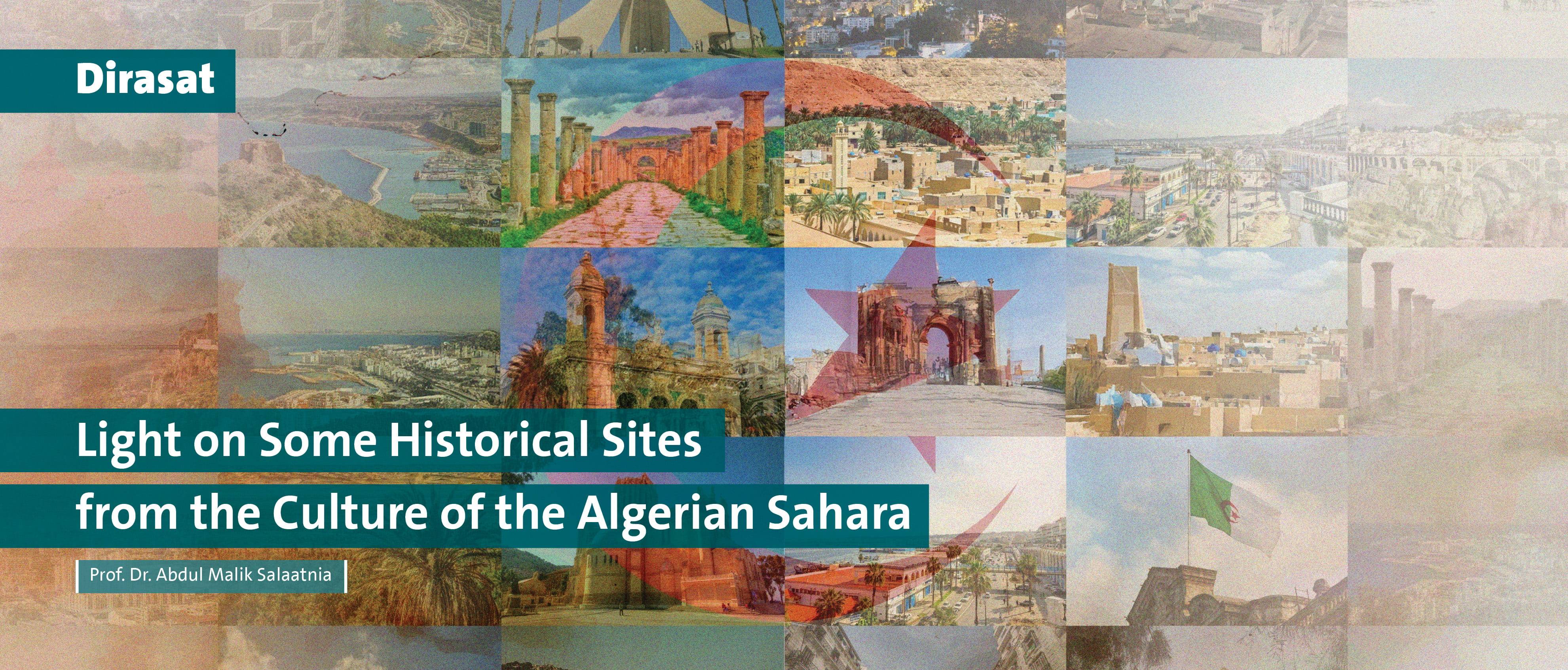
This topic falls within the activities of the International Symposium on Desert Culture, which explores the cultural and heritage history of the Arabian Desert. At first glance, one can see that this field of study is vast and encompasses various aspects of human life that have shaped civilizations over history, influenced by climatic and economic conditions, and defined by societal norms shaped by the necessities of survival. Through our examination, we have constructed a model of life whose impacts are still felt today. Covering more than two million square kilometers, or 4/5 of the total area, the Algerian Sahara has been significantly shaped by human activity for millennia. Archaeological sites spread across vast regions have yielded diverse social cultures with enduring characteristics. This ranges from the stone cultures of prehistoric eras with their achievements, to other cultures that emerged from human imitation of nature, such as the water extraction and distribution practices in the Touat region. These practices aimed at fostering social solidarity and justice among the population to overcome the challenges posed by the desert environment and severe heat. In such harsh conditions, people came together in communities to pursue a common goal: to persist and adapt in the face of nature’s adversities. In conclusion, it is important to highlight that the French nuclear tests. conducted in the Algerian Sahara during the period of occupation constitute crimes against humanity, culture, and the Sahara itself. These acts were not only detrimental to Algeria but also to the broader Arab Sahara and the Arab and Islamic world, as Algeria is an integral part of the Arab and Islamic entity.