HRH Princess Maha bint Mohammed AlFaisal received delegation from the Center for Islamic Civilization of the Republic of Uzbekistan
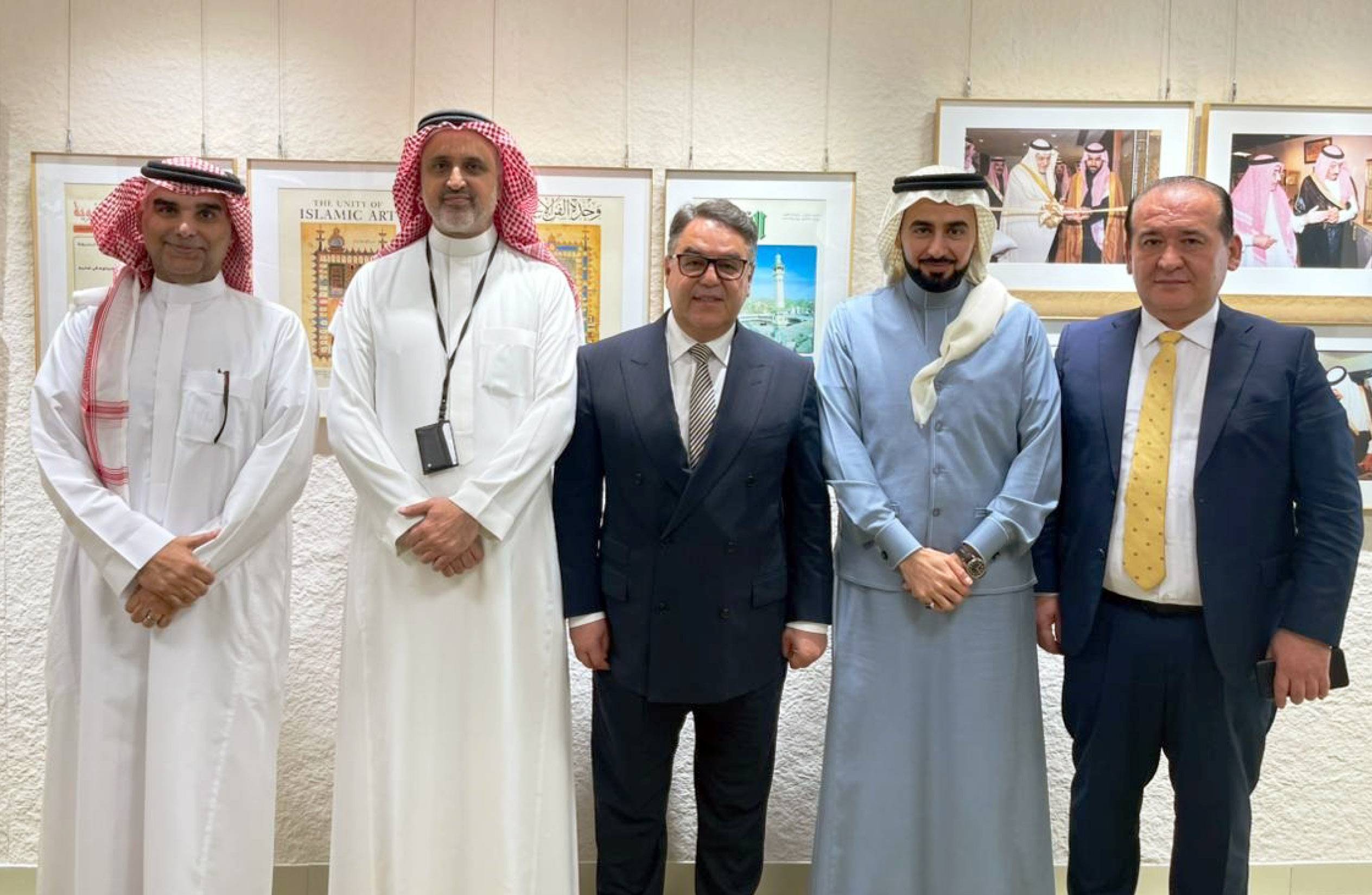
On Tuesday, December 16, 2025, HRH Princess Maha bint Mohammed AlFaisal, Secretary-General of the King Faisal Center for Research and Islamic Studies, received a delegation from the Center for Islamic Civilization of the Republic of Uzbekistan, headed by HE Dr. Firdavs Abdukhalikov, Chairman of the Center for Islamic Civilization under the Cabinet of Ministers of Uzbekistan, in the presence of Dr. Abdullah Hamidaddin, Assistant Secretary-General for Scientific Affairs.
The visit comes within the framework of strengthening cultural and academic cooperation among institutions concerned with Arab-Islamic heritage and affirms the role of the King Faisal Center in preserving civilizational memory, supporting specialized research in manuscripts and early Qur’anic codices, and building scholarly bridges with international institutions dedicated to the history of Arab-Islamic civilization. The visit program included discussions on potential avenues of academic cooperation between the two centers to enhance joint cultural initiatives, as well as a tour of the Al Faisal Museum of the Book and Arabo-Islamic Arts, and the Manuscripts and Saudi Memory Unit.
At the conclusion of the visit, HE Dr. Firdavs Abdukhalikov presented HRH Princess Maha bint Mohammed AlFaisal with a facsimile (exact replica) of the renowned Katta Langar Qur’an. The Katta Langar Qur’an is regarded as one of the oldest known Qur’anic manuscripts in Central Asia and is among the early Qur’ans that scholars date to the late second century AH. Written on parchment in an early Madinan script, its folios are distinguished by their relatively large size, reflecting the nature of comprehensive Qur’anic manuscripts produced during the early phases of the transcription of the Holy Qur’an. The manuscript is also known as the “Great Langar” Qur’an, as it is historically associated with the village of Katta Langar in southern Uzbekistan. Preserved for centuries in a local religious complex, its folios were dispersed during the twentieth century among various scholarly collections. Today, several academic institutions in Uzbekistan hold portions of the manuscript, while the largest part is preserved at the Institute of Oriental Manuscripts in Saint Petersburg.